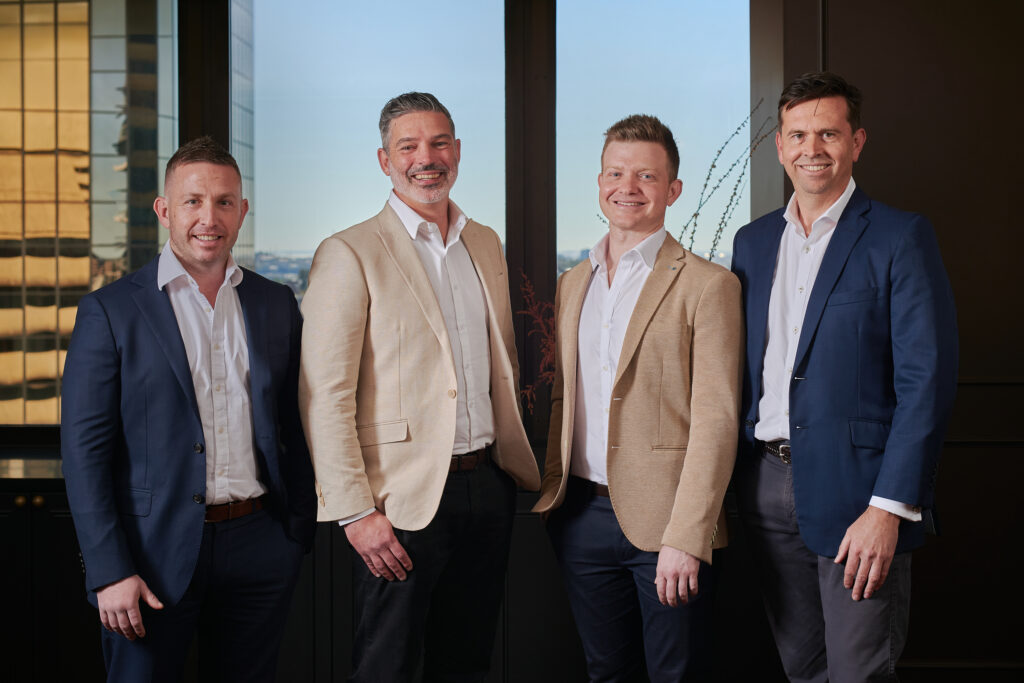
Meet the team

The Brokerage team

Brisbane and Sydney brokers who work on complex lending every day.

Credit representatives of BLSSA Pty Ltd ACL 391237.

Meet the team

The Brokerage team

Brisbane and Sydney brokers who work on complex lending every day.

Credit representatives of BLSSA Pty Ltd ACL 391237.

Commercial Finance

Owner-Occupied Commercial Property Loans

For business owners buying the premises they trade from. Our Brisbane and Sydney commercial brokers structure the purchase around your business, your entity and your cash flow.

Or call 0451 973 662

You're Paying Rent and Want to Own the Building

Your business already pays for a building every month. The question is whether it should keep paying a landlord, or start paying down a loan on premises it owns.

Buying your premises changes more than the monthly figure. It needs a deposit and duty up front, a decision about which entity owns the property, and a lender that is comfortable with both the building and your business.

We help business owners who:

  • Have a lease renewal coming up and want to compare renting with buying.
  • Have been told their landlord is selling the building they occupy.
  • Have outgrown their premises and want to buy something larger.
  • Already own their premises and want to buy a second site.
  • Are considering buying through a family trust, a company or their SMSF.
  • Want to use equity in their home or existing property towards the deposit.

Client example

A $4.2 Million Premises Purchase and Refinance With No Cash Contribution

A strong trading business in Queensland already owned two commercial properties, including its existing premises. To expand, it needed to buy an additional premises without putting cash in at settlement.

We refinanced the debt on both existing properties, releasing equity to fund the full purchase price and costs in a single facility. The business kept about $340,000 in surplus funds at settlement, preserving its working capital.

Case study published 10 August 2026. The structure reflected this client’s existing properties, trading position and the lender’s requirements at the time. It is not an indication of the LVR or terms available to another borrower.

Read how the $4.2 million purchase and refinance was structured

If the property is already owned and the need is a new facility or cash-out, see commercial property refinance and equity release.

  • Facility: $4,198,500
  • LVR: 90%
  • Structure: 30-year principal and interest
  • Property profile: Warehouse / industrial commercial property

Where Are You Right Now?

Your situationWhat a lender will want to understandWhat usually helps
Lease renewal dueHow long you've traded from the site, what you pay now, and whether the property suits the business long term.Current lease, rent and outgoings; two years of financials.
Landlord is sellingThe price, the timetable and whether the sale is on or off market.Early conversation before you make an offer; a valuation-ready contract.
Outgrowing your premisesHow the new site supports growth and whether the business can carry the debt.Financials, forecasts from your accountant, and any new contracts.
Already own premisesThe value of what you own, the debt on it and the equity available.Current loan statements and a recent valuation if you have one.
Buying through a trust or companyWho borrows, who guarantees and how the lease between your entities works.Trust deed or company documents; your accountant's structure note.
Buying through your SMSFWhether the fund can buy and borrow, and how the lease to your business is set.The fund's deed, statements and your SMSF adviser's input.
Buying the business and the buildingBoth purchases, and how the business will trade under new ownership.Business sale contract, financials, and the premises contract.
Your bank said noWhy it declined: servicing, the property, the business or its own policy.The decline reason in writing, and the application you lodged.

How lenders treat owner-occupied commercial property differs: some focus on the business’s trading, others on the property and the lease. Requirements for trading history, deposit, property type and location vary between lenders and change over time.

Start With the Premises Decision in Front of You

Buying the building you rent:

Compare your current rent and outgoings with ownership costs, and plan the purchase around your lease dates.

Buying a bigger or second premises:

Assess the new site, your existing property and the equity available, so expansion doesn’t drain working capital.

Buying through your super fund:

Check whether an SMSF purchase suits your fund and your business before you commit. See our SMSF property loans page.

Buying the business with its premises:

Structure the business purchase and the property purchase together, with your accountant and solicitor.

Tell us which of these you’re planning and any date already set.

Renting, Owning or Buying in Your SMSF

Keep rentingOwn it (company, trust or personally)Own it in your SMSF
Who owns the buildingYour landlordYour chosen entityYour super fund
Cash up frontBond or bank guarantee under the leaseDeposit, transfer duty, registration and legal feesDeposit and costs paid from the fund's money
What you pay each monthRent and outgoings under the leaseLoan repayments, rates, insurance and maintenanceYour business pays the fund rent; the fund meets the loan repayments
Who benefits from any change in valueThe landlordYour entityThe fund (for members' retirement)
FlexibilityMove at lease endSell, refinance or lease outTightly regulated; changes need advice
Main rulesLease termsLender's credit assessmentSuperannuation law and lender's SMSF policy

Super law has specific rules for an SMSF that buys business premises and leases them to a related business, and borrowing inside super has its own rules and costs. Not every lender offers SMSF loans, and the rules can change, so check the current position with your SMSF adviser. Your accountant or SMSF adviser decides whether super is the right owner. We arrange the finance.

What a Lender Looks at When Your Business Is the Tenant

For an owner-occupied purchase, the lender is assessing two things at once: the building, and the business that will occupy it.

  • The business: how long it has traded, its profit, existing debts and how comfortably it can meet the new repayments.
  • The property: its type, location, condition and how easily it could be re-let or sold.
  • The ownership structure: which entity borrows, and the guarantees the lender asks for from directors or owners.
  • The lease between your entities: if a trust or SMSF owns the building and leases it to your company, the lender will want to see that lease.
  • Your contribution: the deposit, costs and any other security offered.

Where the business occupies only part of a building and leases the rest, lenders differ on whether it is treated as owner-occupied. Tell us how much of the space you’ll use.

The Cash You Need: Deposit, Duty and GST

The deposit is only part of the cash a premises purchase needs. Transfer duty, government registration fees and legal costs sit on top.

In both Queensland and New South Wales, duty is calculated on the price including any GST you pay under the contract. (Queensland Revenue Office Public Ruling DA011.1.1; Revenue NSW DUT 033 and DUT 047; checked 27 October 2026.) Ask your accountant how GST on the purchase affects your cash flow and whether it can be claimed back.

Illustrative example only, not a client and not an offer of credit. A business buys a commercial property for $1,500,000 including GST, with a 30% deposit.

QueenslandNew South Wales
Deposit (30%)$450,000$450,000
Transfer duty (general rates)$66,775$63,787
Transfer registration fee$6,393.96$182.73
Mortgage registration fee$248.04$182.73
Cash needed before legal, valuation and lender fees$523,417.00$514,152.46

Duty and fees from Queensland Revenue Office, Titles Queensland (FY2026/27 fees), Revenue NSW (2026/27 rates) and NSW Land Registry Services, as used in our calculator, checked 27 October 2026. One title assumed.

On the $1,050,000 loan, principal and interest repayments over 25 years at an assumed 7.00% p.a. would be about $7,421 a month. That rate is the repayment calculator's example input, not a rate we are quoting. Your rate depends on the lender, the property and your business.

Run your own figures with our buying costs calculator for QLD and NSW and our commercial property loan repayment calculator. Then compare the repayment with the rent and outgoings you pay now.

Using Equity You Already Hold

If you already own your premises, another commercial property or your home, the equity in it can fund part or all of the deposit and costs.

That was the approach in the 10 August 2026 case above, where equity across two existing commercial properties funded the whole purchase. In a 2 August 2023 case, a residential refinance and cash-out of $2,778,000 at 60% LVR with a major bank provided the deposit for a commercial property. Read the residential cash-out used for a commercial deposit

Equity isn’t the same as capacity to repay. The lender still needs to be satisfied the business and its owners can carry the total debt.

When your home is the security, different lending rules can apply, and the purpose of the funds affects which ones. We’ll explain how that works for your deal.

Choosing the Entity That Owns the Building

Many owners hold the premises outside the trading company, for example in a family trust or a separate company, which then leases the building to the business. Others buy in the trading company, personally or through their SMSF.

Each choice changes who borrows, who guarantees, how the lease is set up, and how tax, duty and land tax apply. Your accountant and solicitor advise on the structure. We make sure the lender accepts it before you sign.

Lenders may ask for guarantees from the directors of a company or corporate trustee, and will usually check that the trust deed lets the trustee borrow and give a mortgage.

When the Landlord Is Selling or the Lease Is Ending

Lease dates rarely line up neatly with finance. If your landlord has told you the building is for sale, or your lease expires soon, talk to us before you make an offer.

Have these ready: the last two years of financials, the current lease, the property details and an idea of the price. Then the conversation with a lender can start as soon as terms are agreed.

If you’ve signed a contract with a finance date and the lender is slow to respond, talk to us straight away. Your solicitor advises on the contract itself.

If Your Bank Has Already Said No

A decline from your own bank isn’t always the final word. In June 2018, a South Brisbane business owner’s bank declined an increase to fund renovation and fit-out of his commercial premises. We placed him with another major bank, which refinanced the existing debt and funded the works: a $3,100,000 loan at 70% of the as-if-complete value.

Read the South Brisbane owner-occupier case

That outcome was specific to that client and that time.

Buying the Business and Its Premises Together

When a business sale includes the building, the business purchase and the property purchase can be structured together, often with different entities for each.

In one published case on the Sunshine Coast, the premises were acquired through an SMSF while separate funding covered the business purchase, working capital and future equipment: a $1,900,000 loan at 65% on the property acquisition with a local bank. Read the business and premises SMSF case

Documents

The Documents That Move a Premises Purchase Forward

Your situationUseful starting information
Trading businessTwo years of financial statements and tax returns; year-to-date management accounts; recent BAS.
The propertyContract of sale or agent's details, price, address and any building or tenancy information.
Current leaseYour existing lease, rent and outgoings, and the expiry or option date.
Buying in a trust or companyTrust deed, company extract, and details of directors and guarantors.
Buying in an SMSFFund deed, latest fund statements and your SMSF adviser's details.
Using existing equityCurrent loan statements for the properties involved and any recent valuations.
Business plus premisesBusiness sale contract and the business's financial history.

We’ll tell you what your purchase needs and what’s missing before anything goes to a lender.

Bring Your Accountant Into the Conversation

Your accountant advises on the owning entity, tax, GST and super. Your solicitor handles the contract and any lease between your entities. We bring their work together, compare suitable lenders and manage the application through to settlement.

Your legal and tax advisers remain responsible for advice within their professional scope.

What We Establish in the First Conversation

  • What the business does, how long it has traded and what it pays in rent now.
  • The property you want to buy, its price and the timing.
  • Which entity is likely to own it, and what your accountant has suggested.
  • Where the deposit and costs will come from.
  • Existing business and property debt.
  • Any lease, sale or contract dates already set.

You don’t need a contract to start the conversation.

Process

From Initial Review to Settlement

  1. Step 1: Understand the business and the property

    The premises, the price, the business's trading and the intended owner.

  2. Step 2: Run the numbers

    Rent against ownership costs, the cash needed, and the repayments the business can carry.

  3. Step 3: Research suitable lenders

    How each assesses owner-occupiers, the property type, the entity and the deposit source.

  4. Step 4: Prepare and manage the application

    Financials, structure, valuation and lender questions, coordinated with your accountant.

  5. Step 5: Coordinate approval and settlement

    Meet the conditions and settle with your solicitor, with any fit-out or equipment finance alongside.

Before You Sign the Contract

An indicative discussion, a conditional approval and a formal approval are different stages. A lender may still need a valuation, updated financials and the final structure before it commits.

Agree the owning entity with your accountant before the contract is signed, because changing the buyer later can cost time and may add costs. Your solicitor can advise on the finance clause and who is named as the buyer.

Commercial Property Finance in Brisbane and Sydney

Our commercial brokers in Brisbane and Sydney fund premises purchases for business owners across Australia, from industrial units to professional suites.

Meet the Brokerage team

FAQ

Questions Business Owners Ask About Buying Their Premises

What is an owner-occupied commercial property loan?

A loan to buy commercial premises your own business will operate from. The lender assesses the property and the business that occupies it, rather than relying only on rent from an outside tenant.

How much deposit do I need to buy my business premises?

It depends on the lender, the property and your business. Plan for duty, registration and legal costs on top of the deposit. Existing property equity can sometimes fund part or all of it, as in our 10 August 2026 case.

Is stamp duty charged on the GST?

In Queensland and New South Wales, duty is calculated on the price including any GST you pay under the contract. Your accountant can explain how the GST itself is treated for your business.

Can my family trust or a separate company buy the building and lease it to my business?

Often, yes, and many owners structure it that way. The lender will look at the trust deed or company, the guarantees and the lease between your entities. Your accountant advises on the structure.

Can I buy my business premises in my SMSF?

It can be possible, but super law sets strict rules for SMSF property purchases, leases to a related business and borrowing, and those rules can change. Some lenders lend to SMSFs. Your SMSF adviser decides whether it suits your fund and confirms the current rules.

Can I use my home equity for the deposit?

It can be possible. The loan secured on your home is assessed on its own terms, and the purpose of the funds affects which lending rules apply. We'll explain the options.

My landlord is selling. What should I do first?

Talk to us before you make an offer, and have your last two years of financials, your lease and the property details ready.

My bank declined my premises loan. Is it worth trying elsewhere?

It can be. Lenders assess businesses and property types differently. Find out the exact reason first, and avoid lodging multiple applications at once.

Do you work with industrial and warehouse buyers?

Yes. Our industrial and warehouse property finance page covers those properties in more detail.

Let's Work Out Whether Buying Beats Renting

Tell us what the business pays now and what you’d like to buy. We’ll run the numbers and explain what a lender will need.

General information only. Finance is subject to lender assessment, eligibility requirements and applicable terms. This page is not tax, legal or superannuation advice; speak to your accountant, solicitor or SMSF adviser.

Published by The Brokerage.

The Brokerage Commercial Pty Ltd (ABN 29 605 379 780) is credit representative 487465 of BLSSA Pty Ltd (ACN 117 651 760), Australian Credit Licence 391237.

Contact Us

Email us at the following enquiries@thebrokerage.au, via phone 0451 973 662, or complete the form below.

Name(Required)